I’ve always lived in a city. Some large, some small but I never lived in what might be called a rural area. My grandparents on both sides of my family lived in rural Oklahoma. My parents moved from their rural homes just before WWII to take jobs in the “big” city. This was the normal pattern during that time as there was huge demand for labor in larger towns.
Neither of my parents ever romanticized the life they had left on the “farm”, it was difficult and full of hard labor. Both of my grandparents had small farms—they barely provided for their immediate family. My mother and father had started working off of the farm long before they left—this was their desire, and it helped their family by bringing in other income.
My mother was a very feminine “girl” and there is no doubt in my mind that hands-on farm labor would not be something she would have done. My father joined his father in the hauling business working in the oil fields—they were often gone from the farm—it was run by my grandmother. Making a “living” was the only thing the farm represented—it didn’t mean it was wrong to make a living in some other way, just because you grew up on a farm.
My grandparents wanted their kids to leave the farm and seek a “better” life. Small farmers knew it was a tough, thankless life, full of hardships and many tragedies.
Today many rural people, often not farmers, are angry about their lives and how they have been ignored or even mistreated by city people and government. I’m sure much of this is the overall change in our society that has over emphasized high-tech’s dominance in communication, young over-achievers, and some rather in-your-face entertainment trends. All those trends have deemphasized the contributions by rural communities. While that can feel like some sort of evil plot, I would guess it is just a numbers game; the rural communities just do not represent a substantial market for companies to sell things to.
The majority of those big city people will have some connection in their family tree to the rural life and I would be surprised if those people would belittle people who still farm for a living or live in small towns.
What is really causing this “rural vs city” division along political lines? There are thousands, if not millions, of people who could answer that question better than me—but I won’t let that stop me. My opinion isn’t based on extensive research, just a gut feeling.
It’s about the future. Small towns have declined. Small businesses have closed, and those businesspeople are no longer engaged in promoting the town and being positive about the future. Farmers have occupied most of the rural land, but the non-farmer population of small towns has always been larger in numbers than the farmers. Now many of those people have gone. This decline has been going on for a long time, with little interest from national political leaders.
One of my grandparents lived in Perkins, Oklahoma. When my parents and I would visit, part of the trip was to go “downtown” and have ice cream or (my favorite) to visit a small farm on the edge of town and buy eggs. Everywhere we went, we were all the same people. The ice cream shop owner and the small egg farmer were most pleased to see us, knew us and our connection to the town. To them we were a customer and (at least it seemed that way) friends.
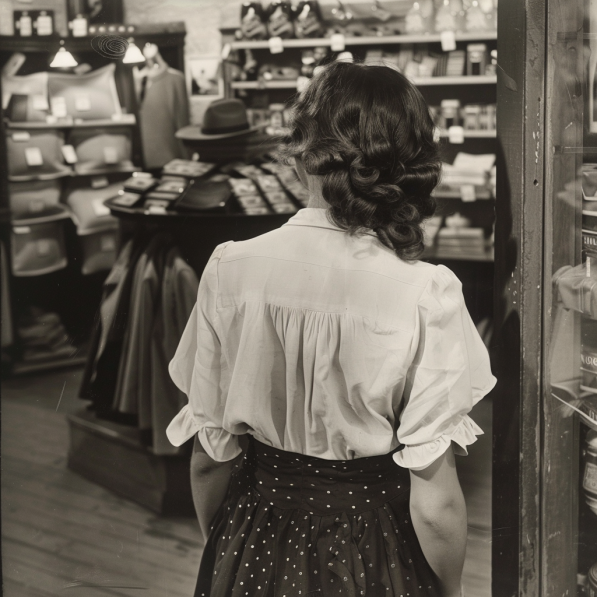
My mother took me to the department store downtown where she used to work and introduced me to the store’s owner. At that time these small towns still had active commerce besides farming. The community was alive and well. The mood during this time (late 1950s) was positive. The future looked bright. By the 1970s much of that promise had gone. Farmers were still farming but the support structure in the small towns had changed. The community of businesspeople had almost gone away.
The future of those small towns looked very bleak. Most of the young people couldn’t wait to leave. Without hope of a better future, almost all of us would turn bitter and look for people to blame.
Government cannot solve all the problems facing humans. But Governments have a role to play in the betterment of their citizen’s lives. I believe the current administration has made a great attempt to make lives better in rural America. Most of this has been ignored. It’s not flashy, and if you’re on the other team, you no doubt don’t believe it or think it’s just bullshit political talk.
I don’t believe Democrat’s should always be in power, but this American Rescue Plan (infrastructure) legislation should have gotten a lot more noise than it did and should be celebrated by everyone. The plan is heavily targeted to rural areas. A Democratic plan (supported by a small but significant number of Republicans) that spends billions in rural America (currently heavily Republican rural America). A plan to benefit your opponent’s supporters? I think most of rural America either does not know about the details of this plan or just don’t believe it.
I’m sure many people who think this will amount to nothing believe the money will be spent on something else and only rack up more debt. As always things can go wrong, but this looks like a major commitment to revitalize a large part of the country and, if it goes as planned, will restore hope to millions.
One of the problems with this type of legislation—it takes a long time to see results. Some of the results are more immediate but the actual spending on many of the projects won’t happen until 2026. Wow, politicians put in place a plan to take the time to spend money wisely, and by the time the results are seen, they most likely will be out of office. Not sure I believe they did that either.
Everyone should take a look at the FACT SHEET regarding this amazing plan.
I believe in many ways the future of the USA is going to be driven by rural America. Big cities have their advantages and their disadvantages—soon we are going to start to see with the benefit of technology the increased strengths of rural towns. Everyone should be proud of this development.
There is no doubt we can disagree about debt, taxes, the role of government, and a long list of social issues; but somewhere in our heart we do need to care for one another—even if we must hide it.
I will still live in a big city, but it would be great to soon visit a revitalized Perkins and talk shop with the egg guy.






 Ted Clifton's Grain of Salt Commentary